




Commercial Dishwasher Not Reaching Sanitizing Temperature? What to Check
Commercial Dishwasher Not Reaching Sanitizing Temperature? What to Check
Commercial dishwasher rinse too cold or sanitizer not dispensing? Learn the causes for high-temp and low-temp machines, what staff can check, and when to call.
A commercial dishwasher that is not reaching sanitizing temperature still looks like it is working. The racks go in, water sprays, the cycle ends. But dishes that were washed without proper sanitizing are not safe to serve on, and a low reading on the gauge is one of the first things a health inspector checks.
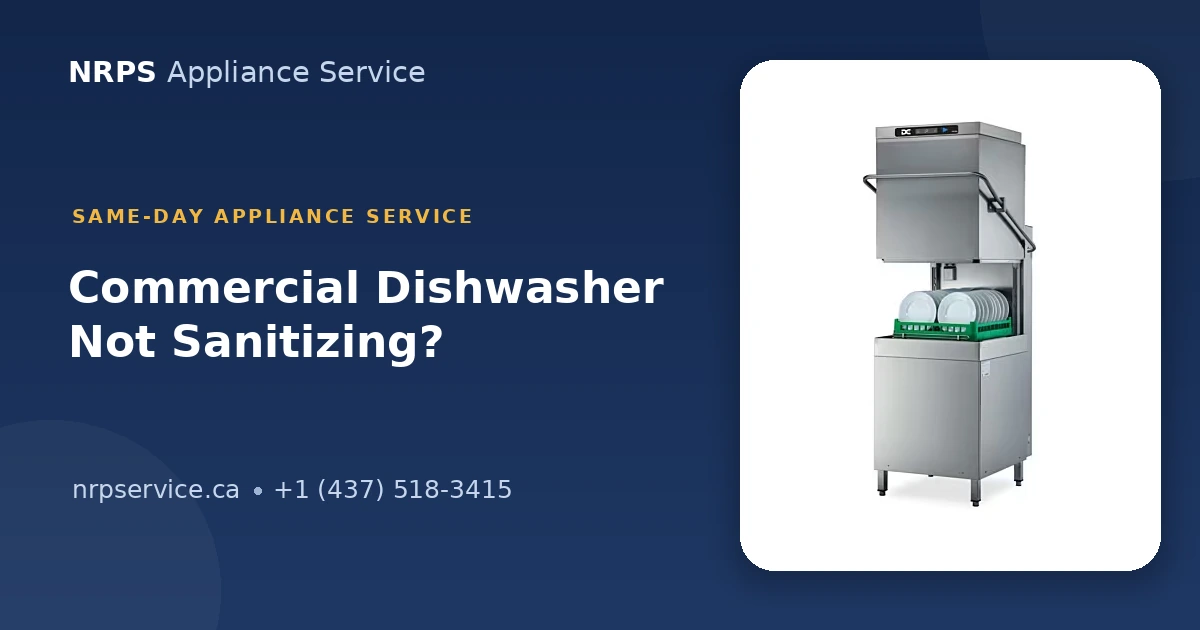
The fix depends on how your machine sanitizes. Some use very hot water, others use a chemical sanitizer, and they fail in completely different ways. Start by working out which type you have.
High-temp or low-temp: which machine do you have?
|
|
High-temp machine |
Low-temp machine |
|
How it sanitizes |
Very hot final rinse water |
Chemical sanitizer in the final rinse, usually chlorine based |
|
Key part |
Booster heater raising rinse water temperature |
Chemical pump and sanitizer container |
|
Typical target |
Final rinse commonly around 82 °C (180 °F) at the rinse arms |
Sanitizer concentration on the chemical label, commonly around 50 ppm chlorine |
|
How to check |
Rinse temperature gauge, or a thermometer strip on a plate |
Chemical test strips on the final rinse water |
|
Clues |
Booster heater cabinet under or beside the machine, steam during rinse |
Chemical containers on the floor with thin tubes running into the machine |
Always confirm the numbers: the exact temperatures and concentrations your machine needs are on its data plate and in the manual, and your local health regulations set the minimums. Use those figures, not general rules of thumb.
Track A: high-temp machine rinse is too cold
On a high-temp machine, the booster heater has one job: take the building's hot water and raise it to sanitizing temperature for the final rinse. When the rinse runs cold, the cause is usually somewhere in that chain.
Incoming hot water is too cool
Booster heaters are sized to add a set number of degrees, not to heat cold water from scratch. If the building's water heater is set too low, has failed, or is being drained by a busy kitchen at the same time, the booster cannot catch up. Run a nearby hot tap and check the temperature before blaming the dishwasher.
Booster heater element or thermostat
Heating elements burn out and thermostats drift. A booster with one failed element out of several may still warm the water, just not enough. This is one of the most common repairs we make on high-temp machines.
Scale build-up
Hard water coats the booster elements and tank with mineral scale, which insulates the element from the water. Heating slows, and the element works harder until it fails. Machines without proper water treatment are especially prone to this.
Running racks too fast
During a rush, staff often start the next rack the moment the last one finishes. The booster never has time to recover, so each rinse is a little cooler than the last. If temperatures are fine early in the day and drop during service, recovery time is a strong suspect.
Gauge or sensor faults
Sometimes the water is hot enough and the gauge is wrong. A thermometer strip run through on a plate tells you which one to trust.
Track B: low-temp machine sanitizer is not dispensing
On a low-temp machine, hot water still helps cleaning, but the sanitizing step depends entirely on the chemical reaching the final rinse at the right strength.
• Empty or nearly empty container. The most common cause by far. Check the sanitizer container first.
• Pick-up tube out of the chemical. A tube that has slipped out of the container, or a weighted end that has floated up, draws air instead of sanitizer.
• Kinked, cracked or blocked lines. Lines get pinched behind machines and stepped on. Crystallized chemical can also block them.
• Worn chemical pump. The squeeze tubes inside peristaltic pumps wear out and stop delivering the right amount.
• Wrong product. A detergent container swapped into the sanitizer line, or the wrong concentration, will not sanitize.
Who maintains the pump? in many kitchens the chemical supplier owns and adjusts the dispensing pumps. If the problem is the chemical setting, call them. If the machine itself is not filling, rinsing or running correctly, that is a repair call.
Other faults that affect both types
• Clogged rinse arms or nozzles. Scale and food debris block the rinse jets, so dishes are not fully covered even when the water is hot or the chemical is correct.
• Low water pressure. Weak flow means poor coverage and, on some machines, a short or incomplete rinse.
• Wash tank heater problems. If the wash water itself is too cool, grease is not removed properly and sanitizing has to work harder. Wash tank temperature has its own minimum on the data plate.
• Faulty rinse valve or controls. A valve that does not open fully, or a control that shortens the rinse, reduces sanitizing contact time.
What staff can check, and what needs a technician
|
Safe for staff |
Leave for a technician |
|
Read the wash and rinse gauges and log them |
Booster heater elements and thermostats |
|
Test the final rinse with temperature strips or chemical test strips |
Electrical faults and control boards |
|
Check and replace sanitizer containers |
Rinse valves, solenoids and pressure problems |
|
Clean and reinstall rinse and wash arms |
Descaling the booster and internal plumbing |
|
Check the building's hot water temperature at a nearby tap |
Wash tank heaters and temperature sensors |
|
Allow recovery time between racks during busy periods |
Any fault that continues after the basic checks |
Until it is repaired: keep serving safely
Do not keep running dishes through a machine that is not sanitizing. Until it is fixed, switch to manual washing in a three-compartment sink: wash, rinse, then sanitize using the method your health regulations allow, and let everything air dry. Many kitchens keep paper or disposable ware on hand for exactly this situation.
Do not guess with chemicals: never add extra sanitizer to the machine or mix products to make up for a fault. Too much chemical is a health hazard of its own.
Stop it happening again
1. Log wash and rinse temperatures, or sanitizer test results, at the start of each shift and during the busiest period.
2. Clean rinse and wash arms daily and delime the machine on the schedule its manual recommends, more often with hard water.
3. Ask about water treatment if scale keeps returning.
4. Check sanitizer stock as part of closing duties, so the machine never starts a shift on an empty container.
5. Book a repair at the first low reading, not after an inspection.
A temperature log also shows an inspector that you are checking, and it helps a technician see whether a problem is constant or only appears at busy times.
Commercial dishwasher repair
NRPS repairs commercial dishwashers for restaurants, cafés, bars, hotels, care homes and other businesses, including booster heaters, wash tank heaters, rinse valves, controls and pumps. Our technicians diagnose the fault on site and give you a clear repair quote before any work begins. See our commercial appliance service for details on how commercial visits work.
Dishwasher not sanitizing? Call +1 (437) 518-3415 or book a commercial service visit online.