



Why Is My Washing Machine Not Filling With Enough Water?
Why Is My Washing Machine Not Filling With Enough Water?
Is your washing machine not filling with enough water? Discover six common causes, understand soil level settings, and learn when to call a professional appliance repair technician in Hamilton.
Why Is My Washing Machine Not Filling With Enough Water?
Have you noticed that your washing machine uses very little water, leaves parts of your laundry dry, or fails to clean your clothes properly? Before assuming that your washer is defective, it is important to understand how modern washing machines control their water levels.
Sometimes, a low water level is completely normal. In other cases, it can indicate a problem with the water supply, inlet valve, water level sensor or another internal component.
Is a Low Water Level Normal in Modern Washing Machines?
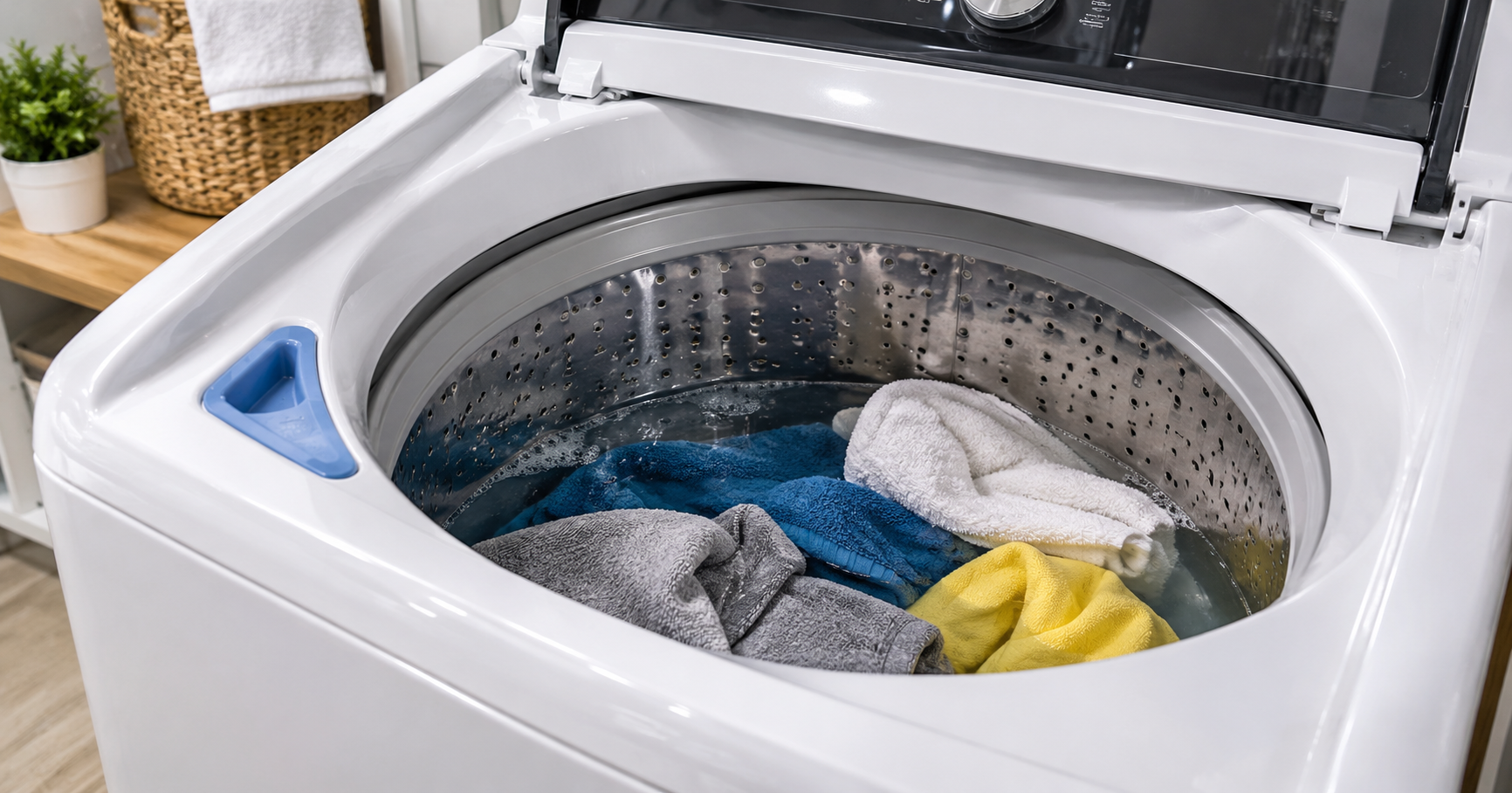
Modern high-efficiency (HE) washing machines are designed to use significantly less water than traditional washers.
Instead of completely filling the tub, many machines automatically determine how much water is required based on the laundry load and selected wash cycle.
A washing machine does not necessarily need to completely submerge your clothes to clean them effectively.
However, if your clothes remain dry, detergent residue is left behind, or the washing machine takes unusually long to fill, there may be an underlying problem.
Does Changing the Soil Level Increase the Water Level?
Many washing machines offer three soil level settings:
- Light
- Normal or Medium
- Heavy
The soil level primarily determines how intensively or how long the washing machine cleans your laundry.
Selecting Heavy Soil does not necessarily mean that the washer will fill with more water. Some models adjust water usage depending on the selected settings, while others mainly increase washing time or mechanical action.
If your washing machine offers a Deep Fill, Deep Water Wash or Water Plus option, that setting is more directly associated with increasing water levels.
Always check the manufacturer’s instructions for your specific model.
Six Reasons Your Washing Machine Is Not Getting Enough Water
1. Restricted Water Supply
Your washing machine depends on an adequate household water supply.
Partially closed faucets, low water pressure or damaged supply hoses can prevent the washer from receiving sufficient water.
Check that the required water supply faucets are fully open and that the hoses behind the machine are not bent or compressed.
2. Clogged Water Inlet Screens
Small filter screens inside the water inlet connections protect the washing machine from sediment and other particles.
Over time, mineral deposits and debris can restrict the incoming water flow.
A restricted inlet screen can cause extended filling times and inadequate water levels.
3. Faulty Water Inlet Valve
The water inlet valve controls the flow of hot and cold water into the washing machine.
If one of its solenoids fails or the valve becomes restricted internally, the washer may fill slowly, receive water at only one temperature, or stop filling altogether.
A technician can determine whether the valve is operating correctly before recommending replacement.
4. Faulty Water Level Pressure Sensor
The water level sensor monitors the amount of water inside the washing machine.
If the sensor or its pressure hose develops a problem, the machine may incorrectly determine that it has received enough water and stop filling too early.
Depending on the fault, the washer may also overfill or display an error code.
5. Incorrect Drain Hose Installation
A washing machine that fills and drains at the same time may have a siphoning problem.
This can happen when the drain hose is positioned incorrectly, allowing incoming water to escape before the washer reaches its required water level.
The drain hose must be installed according to the manufacturer’s height and positioning requirements.
6. Electronic Control Board Problems
The electronic control board coordinates the filling process, monitors sensor readings and activates the water inlet valve.
A malfunctioning control board may interrupt this process.
However, the water supply, inlet valve, wiring and sensors should be tested before replacing an electronic control board.
What Your Washing Machine Symptoms May Mean
|
Symptom |
Possible Cause |
|
Water enters very slowly |
Restricted supply or inlet screens |
|
Only hot or cold water enters |
Supply restriction or inlet valve fault |
|
Water stops entering too early |
Cycle selection or water level sensor |
|
Washer fills and drains simultaneously |
Drain hose siphoning |
|
Washer displays a filling error |
Water supply, valve or sensing problem |
|
Clothes remain partially dry |
Overloading, incorrect cycle or insufficient filling |
Some washing machines display error codes such as LF, F8 E1 or 4C when they detect a filling problem. The exact meaning depends on the manufacturer and model.
What Can You Check Before Calling a Technician?
Before scheduling a repair, try these simple checks:
- Make sure the water supply faucets are fully open.
- Inspect visible water hoses for bends or damage.
- Avoid overloading the washing machine.
- Select the appropriate cycle for your laundry.
- Check whether your washer offers a Deep Fill option.
- Confirm that the drain hose is positioned according to the installation manual.
Never bypass the lid lock, manually add excessive amounts of water or modify the water level sensor to increase the filling level.
Disconnect the appliance from power and shut off its water supply before disconnecting any hoses. Internal electrical and mechanical diagnostics should be performed by a qualified technician.
When Should You Call an Appliance Repair Technician?
Professional diagnosis is recommended if your washing machine:
- Does not fill with water.
- Takes significantly longer than usual to fill.
- Repeatedly displays water supply errors.
- Leaves clothing poorly washed despite correct settings.
- Stops unexpectedly during the wash cycle.
- Overfills or leaks water.
Identifying the actual cause can help prevent unnecessary replacement of expensive components.
Frequently Asked Questions
Should my washing machine completely cover my clothes with water?
Not necessarily. High-efficiency washers are designed to clean clothes using lower water levels.
Does Heavy Soil mean more water?
Not always. Heavy Soil generally changes washing intensity or duration. Water usage depends on the specific model and wash cycle.
Can a faulty inlet valve cause low water levels?
Yes. A restricted or defective inlet valve can reduce or completely stop the incoming water supply.
Why does my washing machine fill and drain at the same time?
Incorrect drain hose installation may cause siphoning. A drainage or control system fault is also possible.
Is it worth repairing a washing machine that is not filling properly?
Many filling problems involve repairable components. The decision depends on the machine’s age, overall condition and diagnostic results.
Professional Washing Machine Repair in Hamilton
If your washing machine is not filling properly, NRPS Appliance Service can help identify the cause and recommend an appropriate repair.
We service major washing machine brands, including Whirlpool, Maytag, Samsung, LG, GE, Bosch, Frigidaire and Kenmore.
Our service areas include Hamilton, Burlington, Waterdown, Dundas and Caledonia.
Contact NRPS today to schedule your washing machine diagnosis.
NRPS – North Repairing Power Service
Email: [email protected]
Website: https://nrpservice.ca
Your Appliance Friend.