



Hoshizaki KM Ice Maker Beeping Three Times and Not Making Ice
Hoshizaki KM Ice Maker Beeping Three Times and Not Making Ice
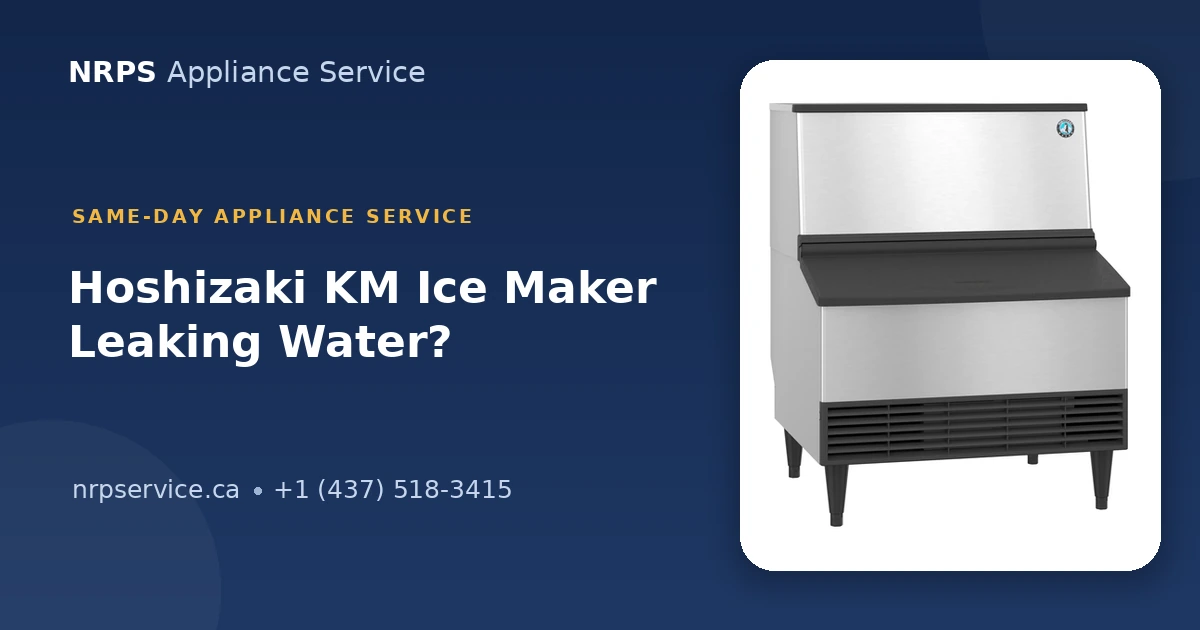
Hoshizaki KM ice maker beeping three times and stopped? Learn what the freeze timer alarm means, what causes it, what to check, and when to call.
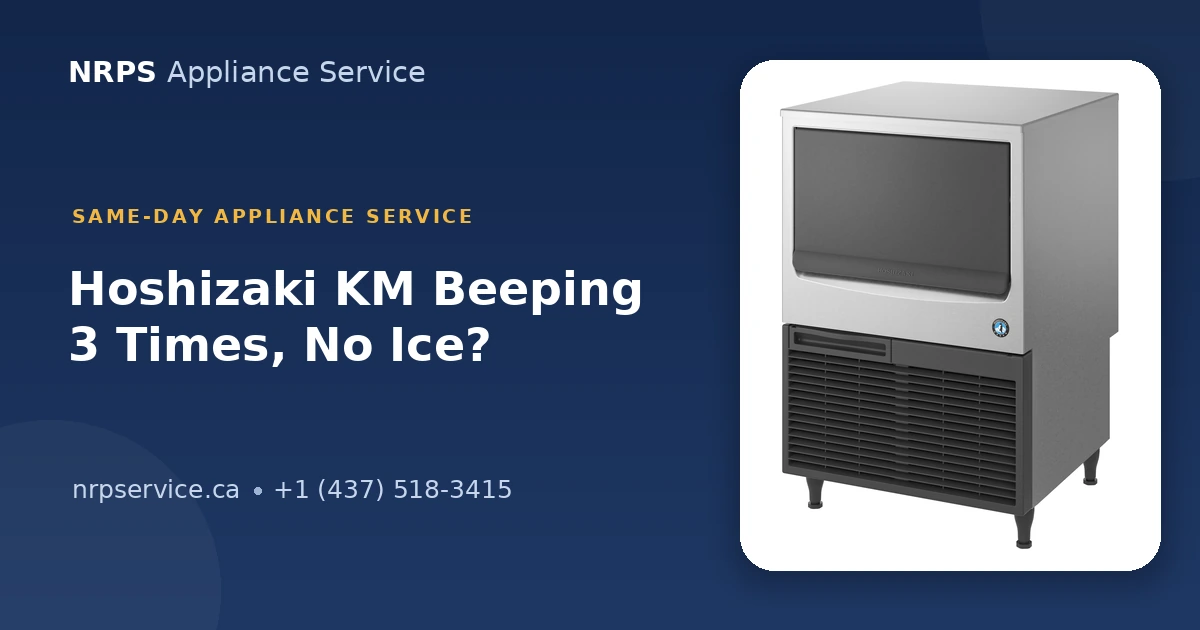
A Hoshizaki KM model ice maker that gives a repeating three-beep alarm and stops producing ice has usually shut itself down after two unusually long freeze cycles in a row. In plain terms, the machine has not detected the water level change it needs to move from the freeze cycle into the harvest cycle, so it stops rather than keep running in a loop.
For a restaurant, bar or café, that means an empty bin at the worst possible time. Here is what the alarm means, what usually causes it, what your staff can check safely, and why pressing reset over and over is not the answer.
How a KM machine knows the ice is ready
Understanding the alarm starts with the normal cycle. During freezing, a water pump circulates water from a small reservoir over the cold evaporator plate, and ice builds up on it layer by layer. As water turns into ice, the level in the reservoir drops.
A float switch sits in that reservoir. When the level falls to a set point, the float drops and tells the control board that the batch is complete. The board then starts the harvest cycle, warms the evaporator slightly and releases the ice into the bin.
If the float switch never signals, the freeze cycle keeps going until a safety timer runs out. When that happens on two consecutive cycles, the control board shuts the machine down and repeats three beeps.
What the KM alarm beeps mean
The three-beep alarm is one of several patterns the KM control board uses. Counting the beeps before anyone resets the machine is the single most useful thing you can do.
|
Beeps |
Alarm |
What it usually points to |
|
1 |
High evaporator temperature |
The evaporator got too hot, often from a harvest system fault, a failed sensor or very hot incoming water. |
|
2 |
Harvest timer |
Harvest took too long twice in a row, so ice did not release normally. |
|
3 |
Freeze timer |
Freezing took too long twice in a row. The subject of this guide. |
|
Other patterns |
Varies by board |
Usually supply voltage or a safety control. Your model's manual lists them. |
What causes the three-beep alarm
1. A scaled or stuck float switch
This is the most common cause by far. Minerals in the water slowly coat the float and its guide, until it sticks in the raised position. The water level drops as normal, but the board never hears about it. Machines on hard water, or machines that are overdue for cleaning, are the most likely to see this.
2. A water inlet valve letting water through
The inlet valve should close completely once the reservoir is filled. If it seeps or stays partly open, it keeps topping up the reservoir during the freeze cycle, so the level never falls far enough to trigger harvest. Scale and debris on the valve seat are frequent culprits.
3. A water pump problem
If the pump weakens or stops, water no longer flows evenly over the evaporator. Ice forms slowly, unevenly or not at all, and the cycle runs past its limit.
4. A refrigeration issue
If the refrigeration system is not cooling the evaporator efficiently, ice simply forms too slowly to finish in time. This can come from a dirty condenser, poor airflow or a fault in the refrigeration system itself.
What your staff can check first
1. Water supply. Confirm the shutoff valve feeding the machine is fully open.
2. Inlet line. Look behind the machine for a kinked or crushed water line, especially if equipment was recently moved.
3. Water filter. Check the date on the filter cartridge. An overdue filter can restrict water flow and cause long, incomplete cycles.
4. Air filters and space. On air-cooled models, make sure the front air filters are clean and nothing is blocking airflow around the machine.
Do not keep resetting it: a reset clears the alarm, not the cause. Each reset buys a few more long cycles, often producing thin or partly harvested ice, while the underlying fault continues. If the three-beep alarm returns after one reset, the machine needs a proper diagnosis.
What to tell the technician
A few details make the diagnosis faster and help the technician arrive with the right parts:
• The full model and serial number from the machine's data label.
• The number of beeps, and whether it has happened before.
• When the machine was last cleaned and descaled, and when the filter was last changed.
• Whether the ice in the bin looked normal before it stopped, or thin and partly formed.
Preventing a repeat
Because scale sits behind most three-beep alarms, regular cleaning is the best prevention. Hoshizaki recommends a full cleaning and sanitizing at least twice a year, and more often with hard water or heavy use. Changing the water filter on schedule protects the float switch and inlet valve too. If your machine also leaves water on the floor, read why a Hoshizaki KM ice maker leaks or drains incorrectly, and if it runs without filling the bin, see why a KM machine makes little or no ice.
Hoshizaki ice maker repair for businesses
NRPS diagnoses and repairs Hoshizaki KM ice machines for restaurants, bars, cafés and other businesses. We find the actual cause, whether that is the float switch, inlet valve, pump or something else, and give you a firm, flat-rate price before any work begins. The service call covers the visit and diagnosis, and it is credited toward the repair if you go ahead. See our ice maker repair service for details.
If the diagnosis points to the sealed refrigeration system, such as a refrigerant leak or compressor failure, we tell you right away, since that work is outside our standard ice maker service.
Keep downtime short with a care plan
An NRPS care plan includes labour and priority scheduling, so an ice machine alarm gets attention fast instead of waiting in the queue. See how the care plans work →
Hoshizaki beeping and not making ice? Call +1 (437) 518-3415 or book online.