




Dishwasher Leaking? Find the Source With a 15-Minute Towel Test
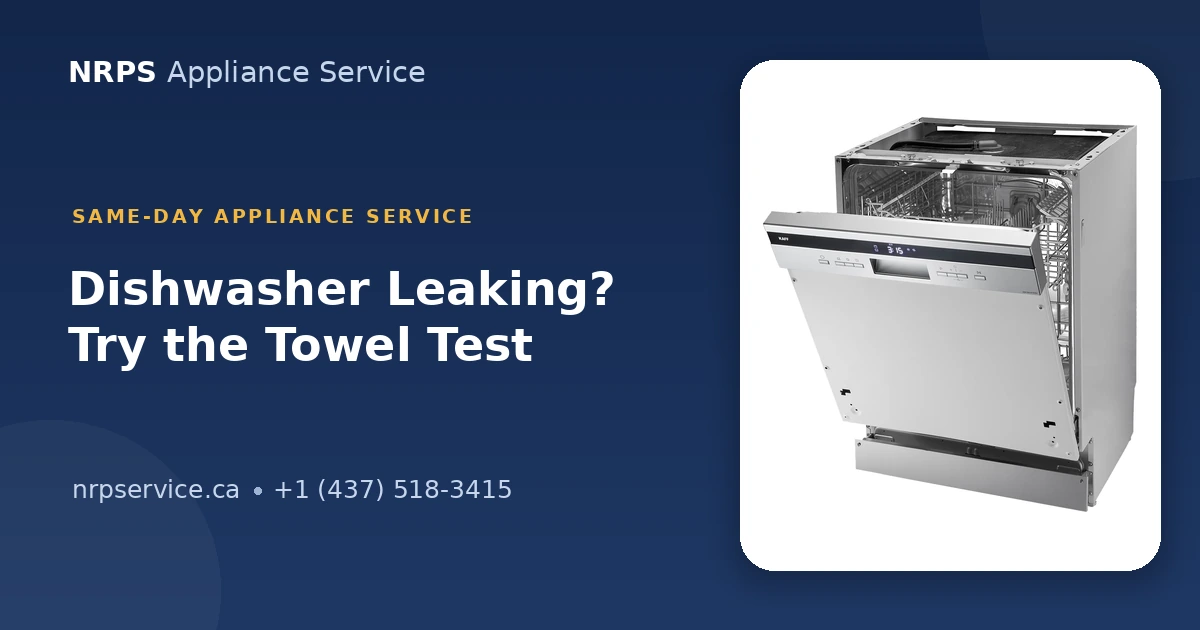
Dishwasher Leaking? Find the Source With a 15-Minute Towel Test
Water under or in front of your dishwasher? Use a simple towel test to pinpoint where it leaks, then match it to the likely cause and fix.
A puddle in front of the dishwasher is easy to spot. Finding where it came from is harder. Water runs along the floor and under cabinets, so the spot where you see it is rarely the spot where it escaped. Guessing leads to replacing the wrong part, and a leak left running quietly under a dishwasher can soften the subfloor and stain cabinets long before anyone notices.
The good news is that you can usually narrow down the source in about fifteen minutes, with nothing more than paper towels and a flashlight. Here is how.
Step zero: stop the damage
1. Cancel the cycle and let it drain if it will.
2. Turn off the water supply valve, usually under the kitchen sink.
3. Switch the dishwasher off at the breaker if water has reached the area under the machine.
4. Dry the floor completely. You need a dry starting point for the test.
Is it even the dishwasher?
Open the cabinet under the sink before you blame the dishwasher. The sink trap, the garbage disposal, the faucet supply lines and the dishwasher's own drain and supply connections all live there, and water from any of them can run along the cabinet floor and appear in front of the dishwasher. If the cabinet floor is wet, the source is likely under the sink.
The 15-minute towel test
The idea is simple: put dry paper towels at every place water could escape, run the dishwasher, and see which towel gets wet first.
5. Remove the kick plate. The panel along the bottom front of the dishwasher usually comes off with two screws. Behind it you can see the pump, the hoses and the water valve with a flashlight.
6. Place your towels. Lay one along the bottom edge of the door, one under the front left corner and one under the front right corner beneath the machine, and one on the cabinet floor under the sink near the dishwasher connections.
7. Run a short cycle, empty. Turn the water and power back on and start a rinse or quick cycle with no dishes and no detergent.
8. Watch the key moments. Check the towels as the dishwasher fills, once or twice during washing, and again when it drains. Many leaks only happen at one of these points.
9. Then repeat with detergent. If the empty run stays dry, run a normal cycle with your usual detergent. A leak that only appears now points to suds or loading, not a failed part.
Make it easier to read: a few drops of food colouring in the tub during the empty run makes it obvious whether the water on a towel came from inside the dishwasher.
What the wet towel tells you
|
Where the water shows up |
Most likely cause |
|
Along the bottom of the door, during washing |
Worn door gasket, spray arm aimed at the door, too much suds, or a dishwasher that is not level. |
|
Under the machine, during filling |
Water inlet valve or its supply connection. |
|
Under the machine, during washing |
Pump or motor seal, a cracked spray arm hub, or a heating element seal. |
|
Under the machine, during draining |
Drain pump, or the drain hose connection at the pump. |
|
Under the sink, during draining |
Drain hose clamp at the disposal or sink tailpiece, or a cracked drain hose. |
|
Only with detergent in the cycle |
Wrong detergent, too much detergent, or rinse aid overflowing. |
|
Nowhere obvious, but the floor is damp |
A slow leak from a seal, tub crack or hose. Time for a technician. |
The common causes, explained
Too many suds
Regular dish soap in a dishwasher creates a mountain of foam that pushes out past the door seal. Even the right detergent can over-foam if you use too much, or if a load went in after hand-washing with soapy residue. If suds are the problem, run an empty rinse cycle and switch back to dishwasher detergent.
The door gasket
The rubber seal around the tub hardens, cracks or collects food over the years. Wipe it clean and look for splits or flattened sections. A damaged gasket is one of the most common and least expensive leak repairs.
A dishwasher that is not level
If the dishwasher tilts forward, water collects against the door instead of the tub floor. This often happens after new flooring is installed or the machine is pulled out. Place a level on the open door and the rack rails.
Spray arms
A cracked spray arm, or one knocked loose, can send a jet of water straight at the door seal. Tall items that block the arm can do the same.
Overfilling
A float inside the tub tells the dishwasher when to stop filling. If food debris jams it, or the inlet valve fails to close, the tub can overfill and spill out the front.
Pump, motor and heating element seals
These seals sit underneath the tub where you cannot see them from inside. They wear with age and leak during washing or draining. Replacing them is a job for a technician.
Hoses and connections
The supply line, the drain hose and their clamps can loosen, crack or chafe, especially if the dishwasher was pulled out recently. If you have a garbage disposal, the drain connection there is a common weak point too. Drainage trouble and leaks often go together, so see also why a dishwasher stops draining.
Hidden leaks: the signs to watch for
Not every dishwasher leak makes a puddle. Slow leaks underneath can run for months. Watch for:
• Flooring in front of the dishwasher that is lifting, cupping or soft underfoot.
• Dark stains or swelling on the cabinet sides next to the dishwasher.
• A musty smell around the base of the machine.
• A dishwasher that stops mid-cycle and drains continuously. Many models have a base tray with a float switch that shuts the machine down when it detects water. On Bosch dishwashers, for example, this often shows as error E15.
Do not keep running it: if your dishwasher's leak protection has tripped, water has already escaped into the base. Resetting it without finding the cause usually means more water under the floor.
Repair or replace?
Almost every dishwasher leak is worth repairing. Gaskets, valves, hoses, seals and spray arms are all routine parts. The main exception is a cracked tub, which on most models means replacement. A technician can confirm which one you are dealing with before you spend anything on the repair itself.
Dishwasher leak repair
NRPS repairs leaking dishwashers from all major brands, including door seals, inlet valves, pump seals, drain hoses and leak protection faults. We find the source, check for water damage underneath, and give you a firm, flat-rate price before any work starts. See our dishwasher repair service for details.
Fewer surprises with a care plan
If you would rather not deal with faults like this at all, an NRPS care plan includes labour, gives you priority scheduling, and covers every appliance in your home under one membership. See how the care plans work →
Water under the dishwasher? Call +1 (437) 518-3415 or book online.