



Why Has My Ice Maker Stopped Making Ice?
Why Has My Ice Maker Stopped Making Ice?
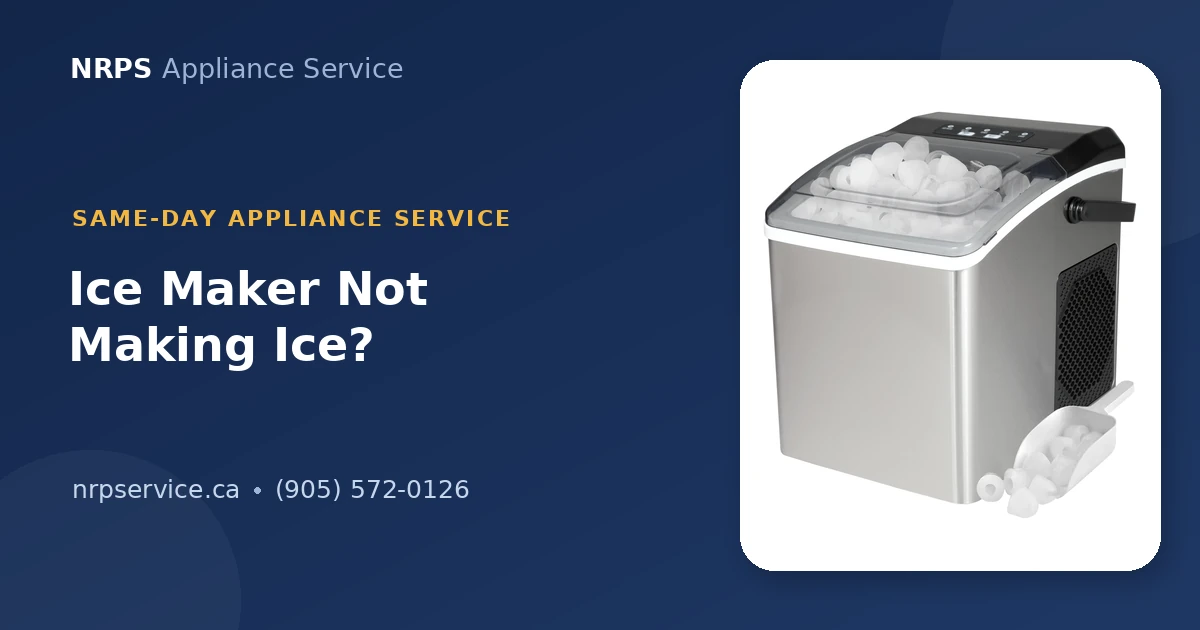
Ice maker stopped producing? It runs a four-stage cycle, and the fault is always at one specific stage. Here is how to find which one, and what causes it.
An ice maker is the one part of a refrigerator that nobody thinks about until the bin is empty. Then it becomes urgent, usually on the day you have people coming over.
The useful thing about this particular fault is that an ice maker is not one mechanism. It is a small machine running the same four-stage loop over and over, and it can only stop at one of those four stages. Work out which one, and the cause narrows to two or three possibilities instead of twenty.
The loop an ice maker runs
|
Stage |
What happens |
How you know it got this far |
|
1. Fill |
A valve opens and water runs through a fill tube into the mould. |
There is water, or ice, sitting in the mould. |
|
2. Freeze |
The mould sits until a sensor decides the cubes are frozen through. |
The cubes in the mould are solid rather than slushy. |
|
3. Harvest |
A small heater briefly warms the mould so the cubes let go, and an ejector arm sweeps them out. |
Cubes reach the bin rather than staying in the mould. |
|
4. Detect |
The machine checks whether the bin is full. If not, it starts again. |
A new batch follows a few hours later. |
Start here: open the freezer and look inside the ice maker mould itself, not just the bin. Empty and dry means it never filled. Water sitting in it means it filled but never froze or never released. Ice stuck in the mould means it froze but the harvest failed. That one look tells you which stage to read about.
Stage 1 The mould is empty and dry, so water is not arriving
This is the most common group, and most of it sits outside the ice maker itself.
• The shut off valve. The small valve on the water line behind or under the fridge gets knocked closed when the appliance is moved for cleaning. Worth ruling out first because it costs nothing.
• A kinked or crushed line. Same cause, usually the fridge being pushed back too far against the line.
• An overdue water filter. A filter that has not been changed in a year or more restricts flow enough that the ice maker never gets its fill, even while the drinking water dispenser still works after a fashion. A filter that is not seated or locked properly does the same thing.
• The water inlet valve. This is the electrically operated valve that lets water through on demand. It needs adequate household pressure to open fully, and it wears out.
• A frozen fill tube. The single most satisfying diagnosis on this list, and the one people rarely guess.
Why the fill tube freezes: when the inlet valve starts to weaken, it stops sealing perfectly and lets a slow drip through after the fill finishes. That drip sits in the fill tube, in a freezer, and turns into a plug of ice. Now nothing can get through at all. Clearing the ice makes it work again for a few days, then it returns, because the drip that caused it is still there. If your ice maker keeps stopping and starting, this is very likely why, and the real repair is the valve rather than the ice.
Stage 2 There is water in the mould, but it never freezes properly
Then the problem is the freezer, not the ice maker. Ice needs the compartment to be genuinely cold, around minus eighteen degrees. A freezer running warmer than that will still keep food frozen, so nothing looks wrong, but the ice maker never reaches the point where it decides to harvest.
Check the freezer setting, make sure the door is sealing, and confirm the vents are not blocked by packed food. If the freezer itself is struggling, that is a bigger issue than the ice maker, and our guide to a warm fridge with a cold freezer covers the cooling and airflow side.
One more thing worth knowing: a freezer that is constantly opened, or that has just been restocked with a large shop, warms up enough to pause ice production for several hours. That is normal behaviour rather than a fault.
Stage 3 Ice is stuck in the mould, so the harvest is failing
The cubes froze, and then nothing released them. Two components do that job, and either can fail.
The mould heater. A thin heating element warms the mould for a few seconds so the ice loosens. Without it the cubes are welded in place and the ejector cannot move them.
The ejector motor or arm. The small motor that sweeps the cubes out can seize or strip, often after it has been forced against ice it could not release.
A related and much simpler cause: a single cube that fell awkwardly and jammed the mechanism. If the arm is physically blocked, clearing the jam by hand can be all it takes, though repeated jamming usually means the harvest was already weak.
Stage 4 Everything works, but it stops after one batch
Here the machine thinks the bin is full when it is not. How it decides depends on the model.
• A feeler arm, also called a bail arm. A wire arm that rises as ice piles up and shuts production off. If it is latched in the raised position, the ice maker is simply switched off, and a surprising number of dead ice makers are nothing more than this. A bag of frozen food leaning against the arm has the same effect.
• An optical sensor. Newer models shine an infrared beam across the bin. Frost, ice splash or a smear on either window blocks the beam, and the machine reads a full bin. Wiping the two small windows clean is a two minute job that fixes a real share of these.
It does make ice, but something is wrong with it
|
What you notice |
Usual explanation |
|
Small, hollow or partly formed cubes |
Not enough water per fill. A restricted filter, low pressure, or a weakening inlet valve. |
|
Production has slowed rather than stopped |
A freezer running slightly warm, a door opened often, or a filter due for changing. |
|
Cubes fused into one block |
Ice sitting unused and slowly melting and refreezing, often alongside a door seal that is letting warm air in. |
|
Ice tastes or smells wrong |
An old filter, or ice absorbing odours from uncovered food. Ice picks up smells readily. |
|
Nothing at all from a newly installed fridge |
Often normal. The first batch can take up to a day, and the first few batches are worth discarding. |
What you can check yourself
1. Look inside the mould, not just the bin, and note what you find. That is the whole diagnosis in one glance.
2. Check the feeler arm is down, or wipe the sensor windows if your model uses them.
3. Confirm the water shut off valve behind the fridge is open and the line is not kinked.
4. Check when the water filter was last changed, and change it if nobody can remember.
5. Check the freezer is genuinely cold and the vents are not blocked by food.
6. If the fridge or the ice maker is newly installed, give it a full day before assuming a fault.
Do not use a knife, a screwdriver or any sharp tool to chip ice out of the mould or the fill tube. The mould, the heater and the tube are all easy to puncture, and turning a valve repair into a component replacement is a poor trade.
When to call a technician
Book a diagnosis if the mould never fills and the valve, line and filter all check out, if ice keeps freezing solid in the fill tube after you clear it, if the cubes freeze but never release, or if production stopped and none of the simple checks above changed anything.
NRPS repairs ice makers on all major refrigerator brands, including inlet valves, fill tubes, mould heaters, ejector motors, feeler arms and optical sensors, on French door, side by side and top freezer models, as well as standalone and under counter ice machines. Our pricing is flat and confirmed upfront, and the details are on our ice maker repair service page.
One honest note: sealed system faults, meaning refrigerant leaks and compressor failures, sit outside our standard repair. They are rarely the cause of an ice maker problem, but if that is what we find we will tell you straight away rather than after a long diagnosis.
Keep every appliance covered
If you would rather not be caught out by a failure like this, an NRPS care plan includes labour, gives you priority scheduling, and covers every appliance in your home under one membership. See how the care plans work →
Ice maker stopped? Call (905) 572-0126 or book online, and tell us what you found in the mould when you call.