



Getting Your Appliances Through a Canadian Winter

Getting Your Appliances Through a Canadian Winter
Cold weather causes appliance faults that never happen in summer, from garage fridges that stop cooling to frozen dryer vents. Here is what to do before it hits.
Appliances do not fail randomly through the year. Certain faults arrive with the cold, and they arrive every year, in the same order, for reasons that have nothing to do with the age of the appliance.
Autumn is the useful moment to deal with them, partly because the work is smaller before something fails and partly because of the timing problem at the end of this article.
The garage fridge that stops working in winter
This is the most surprising one, and it catches people out every year, usually with a freezer full of food.
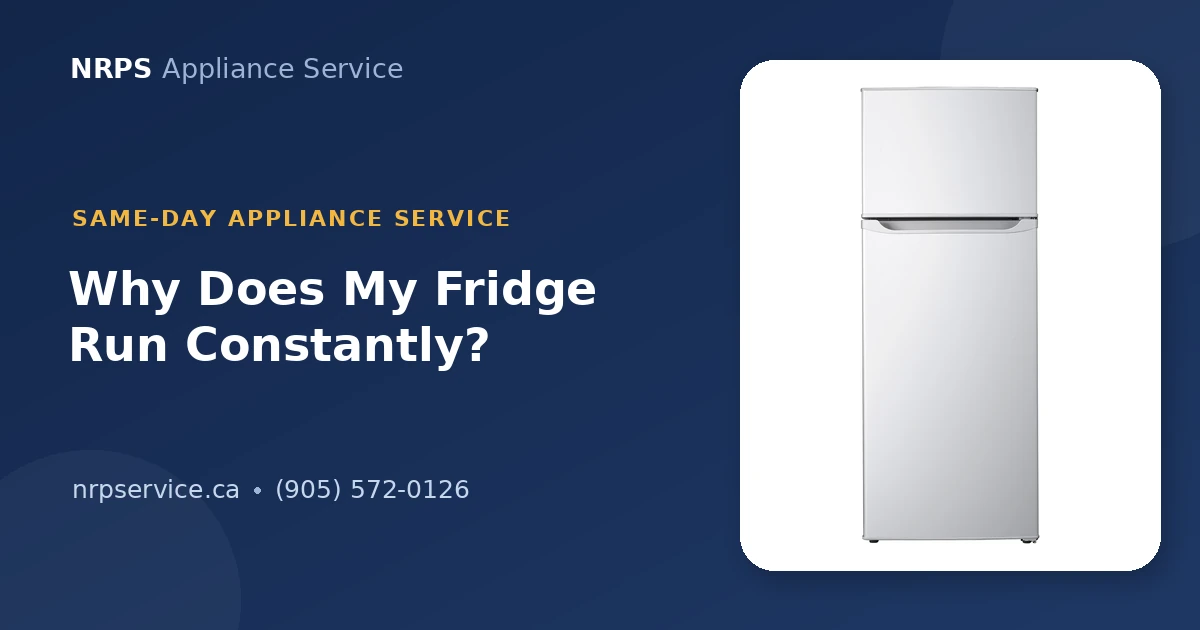
A refrigerator decides when to run by sensing the air temperature around the fridge compartment. In a cold garage, that air is already colder than the target, so the fridge concludes it has nothing to do and stops running. The fridge compartment is fine, because the garage is doing the work. The freezer, however, needs to be far colder than the garage ever gets, and because the compressor is not running, it slowly thaws.
So the classic winter symptom is a garage freezer defrosting while the fridge section seems perfectly cold, which sounds impossible until you know why.
|
Situation |
What to do |
|
A unit rated garage ready |
Nothing. These are built with a heater or a separate control strategy for exactly this. |
|
An ordinary fridge in an unheated garage |
Either keep that space above the manufacturer's minimum operating temperature, or move the food to an indoor freezer for the winter. |
|
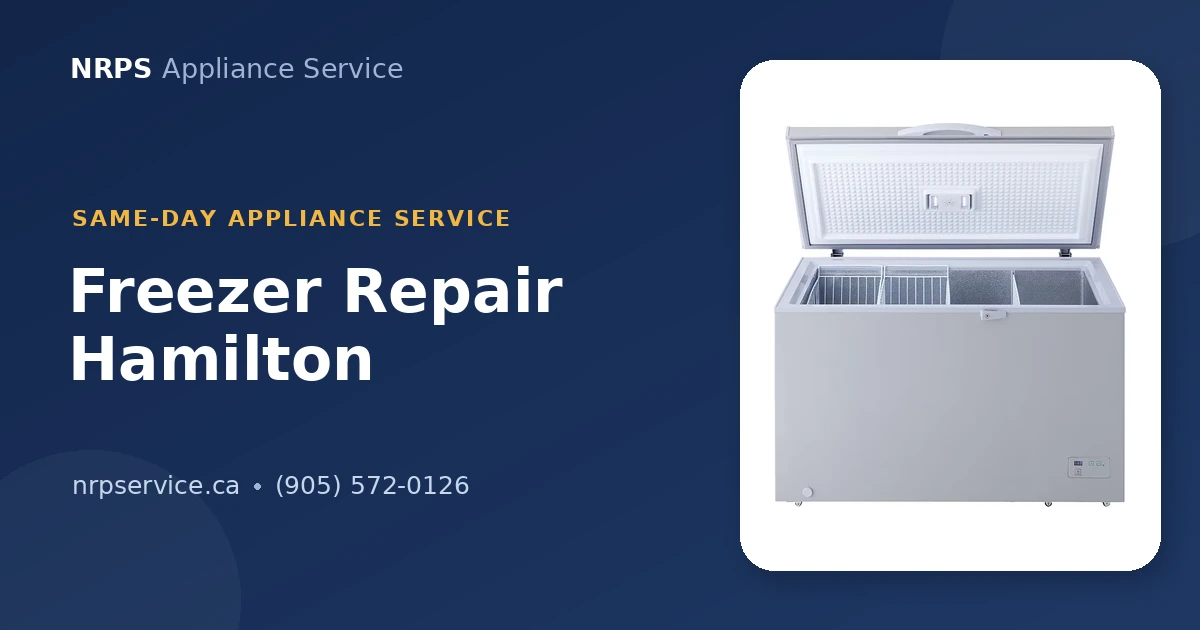
A chest freezer in a cold garage |
Chest freezers generally cope better, but check the manual for the minimum ambient temperature before relying on it. |
Worth checking in October, not January: if your garage freezer holds the family's meat supply, finding this out in February costs far more than the appliance ever did. Put a thermometer in it now and watch what happens through the first properly cold week.
The dryer vent, outside
Warm moist air leaving a dryer meets freezing air at the wall cap, and the moisture condenses and freezes there. Over a cold snap the flap can ice shut entirely, and once it does the dryer has nowhere to push its air.
The symptoms look exactly like a failing dryer: clothes needing two cycles, a laundry room that feels humid, and the machine running hot. It is also the condition that trips thermal fuses and, when ignored, contributes to dryer fires.
• Go outside on a cold day while the dryer runs and confirm air is actually coming out.
• Clear snow and ice away from the vent cap, and check it is not buried by a snowbank or blocked by drifting.
• Make sure the flap can still move freely.
Our guide to a dryer that takes too long to dry covers the three tests that tell you whether the problem is the vent, the heat or the washer.
Water lines that run through cold spaces
Any appliance plumbed into the water supply is at risk wherever its line passes through an unheated space or runs along an exterior wall. Fridge ice maker lines are the most common casualty, because they are narrow and often routed with little thought.
• A fridge ice maker that stops producing during the first cold snap is often a frozen supply line rather than an appliance fault.
• Washing machine hoses in an unheated basement or an attached garage carry the same risk, with far worse consequences if a line splits.
• If you leave the house for a stretch in winter, shutting off the water to the laundry is a small habit with a large payoff.
If the ice maker has stopped and you are not sure why, our guide to an ice maker that stopped making ice works through the four stages of the cycle.
Heavier laundry, every week
Winter loads are simply harder. Coats, snow pants, heavy bedding and towels are denser and hold far more water than summer laundry, and that lands on the two parts of a washer that already work hardest.
• Spin and balance. A heavy winter load is where a weakening suspension finally announces itself, usually as banging on the spin cycle. If yours has started doing that, our guide to a washer knocking during the spin cycle explains why it is worth acting on early.
• Drying time. Thick items take much longer, which hides a developing vent problem behind an apparently reasonable explanation.
• Resist the temptation to wash one duvet or several coats as a single load. Overloading is the most common cause of winter laundry faults.
The appliances that get a workload spike
From late November the kitchen does more work in six weeks than it does in the rest of the winter combined. Ovens run for long sessions at high temperature, dishwashers run daily instead of every second day, and fridges are opened constantly and packed to capacity.
That matters because a marginal fault becomes an obvious one under load. An oven element that was quietly weakening, a dishwasher that was draining slowly, a fridge with a tired door seal: all three are far more likely to fail in December than in October, and far harder to get fixed quickly at that time of year.
The practical advice: if something has been slightly wrong for a while, deal with it in the autumn rather than waiting. Appliance repair demand peaks sharply around the holidays, and so does the cost of being without an oven.
A short autumn checklist
1. Put a thermometer in any garage fridge or freezer and watch it through the first cold week.
2. Check the dryer vent outside for ice, snow and a flap that still moves.
3. Look at where your fridge and washer water lines run, and insulate any stretch in an unheated space.
4. Clean the dryer lint screen properly, including washing it if you use dryer sheets.
5. Vacuum the fridge condenser coils, since the kitchen is about to ask more of the appliance.
6. Run the oven on a high setting for twenty minutes and confirm it still reaches temperature, well before you need it for a crowd.
7. Book anything that has been not quite right for a while.
For a year round version of this, our appliance maintenance calendar sets out what is worth doing monthly, quarterly and annually.
Appliance repair across the winter
NRPS repairs all major household appliances through the winter, including the cold weather faults above. Our pricing is flat and confirmed upfront, and you can see every appliance we cover on our services page.
Maintenance handled for you
If you would rather not deal with faults like this at all, an NRPS care plan includes labour, gives you priority scheduling, and covers every appliance in your home under one membership. See how the care plans work →
Something already not quite right? Call (905) 572-0126 or book online.