



Why Is There Standing Water in the Bottom of My Dishwasher?
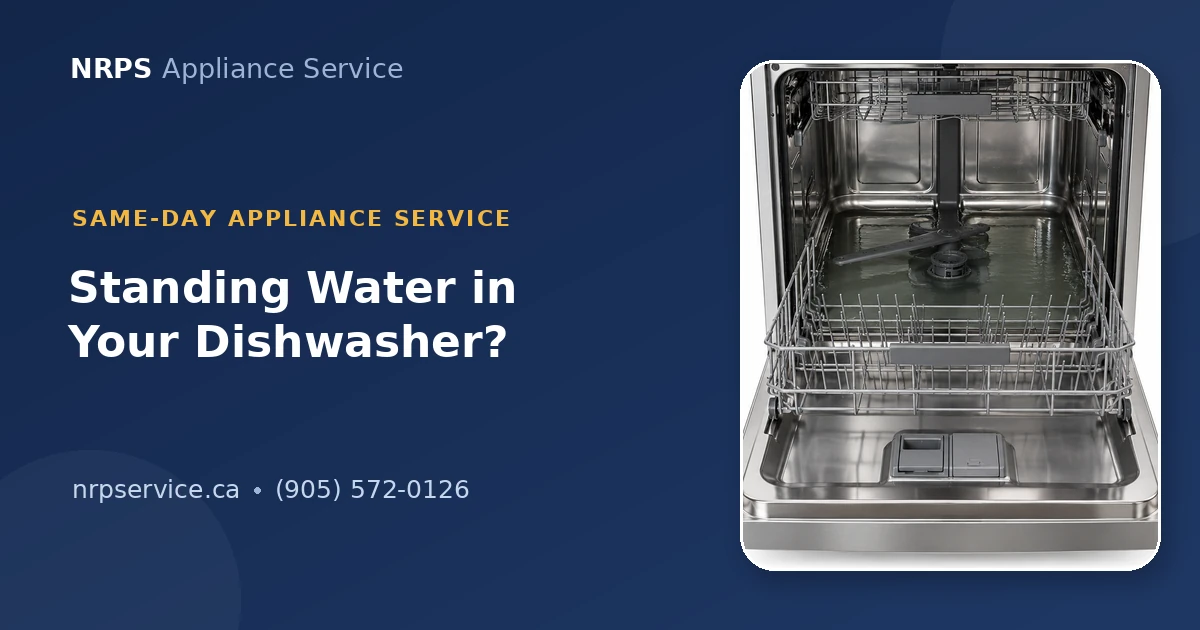
Why Is There Standing Water in the Bottom of My Dishwasher?
Standing water in the bottom of your dishwasher? The cause is often outside the machine. Here is the full drain path, what to check, and when to call.
You open the dishwasher after a cycle and there is a pool of dirty water sitting in the bottom. It is one of the most common appliance complaints there is, and one of the few where the fault very often is not in the dishwasher at all.
That is the thing most guides miss. A washing machine drains into its own hose and out. A dishwasher shares its exit with your kitchen sink, and usually with your garbage disposal too. So before taking the machine apart, it is worth understanding where the water is supposed to go, because the blockage is frequently somewhere in that shared path.
First: how much water is normal?
A small amount of clean water sitting in the sump, the recessed area around the filter, is normal on many models. It keeps the seals from drying out. If you can cover it with a paper towel, it is not a fault.
What is not normal is standing dirty water deep enough to cover the bottom of the tub, or water that reappears after every cycle. That is what this article is about.
Where the water actually goes
The route out of a dishwasher is longer than most people realise, and there is a potential blockage at every stage.
|
Stage |
What happens there |
|
Filter and sump |
Food debris is caught before the water reaches the pump. |
|
Drain pump |
Pushes the water out of the machine. Has its own small impeller. |
|
Drain hose and high loop |
Carries water up and over, which stops dirty water flowing back in. |
|
Air gap, if fitted |
A small cylinder on the counter that prevents backflow from the sink. |
|
Garbage disposal or sink drain |
The final exit, shared with your kitchen sink. |
The key insight: the last two stages are outside your dishwasher entirely. If your kitchen sink also drains slowly, start there rather than blaming the appliance.
Start outside the machine
These causes are the ones homeowners almost never check, and between them they account for a large share of the calls we attend.
The disposal knockout plug, on a new installation
This one deserves to be first, because it is the most frustrating and the most avoidable. When a garbage disposal is manufactured, the port where a dishwasher hose connects is sealed with a knockout plug. Whoever installs the dishwasher is supposed to remove it. If they do not, the dishwasher can never drain, from day one.
If your standing water problem started immediately after a new dishwasher or a new disposal was installed, this is very likely the answer, and it is a quick fix.
A clogged garbage disposal
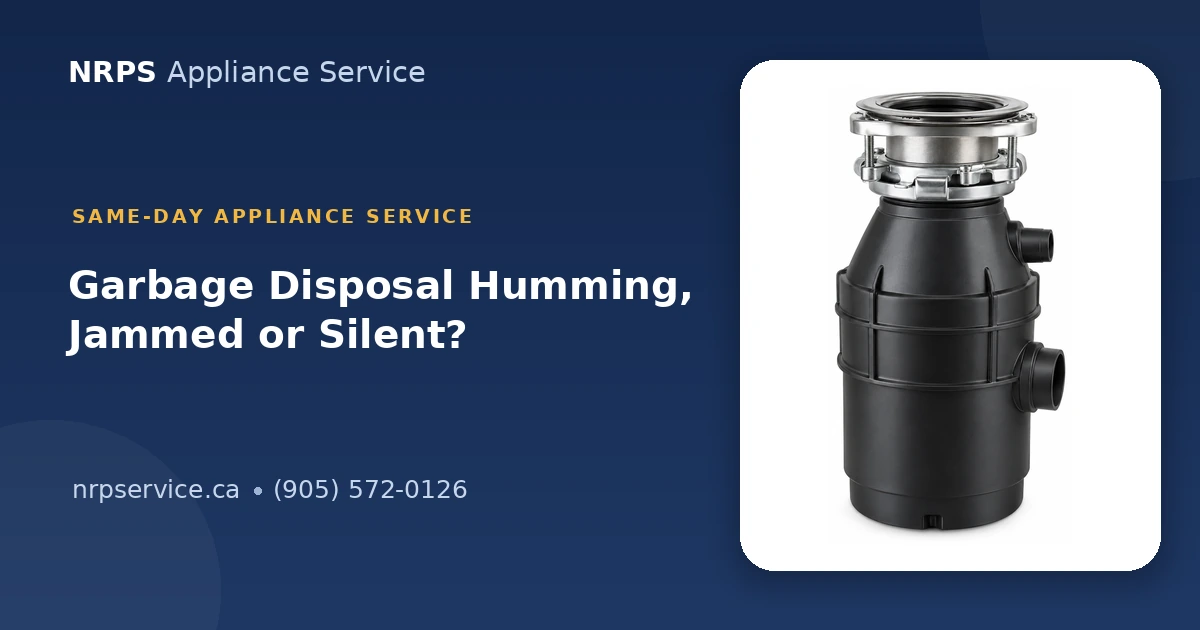
If your dishwasher drains through the disposal, anything blocking the disposal blocks the dishwasher too. Run the disposal with cold water first and see whether the dishwasher then drains. If the disposal itself is jammed or humming, our garbage disposal repair service covers that side of it.
A blocked air gap
If you have a small chrome cylinder on the counter beside the tap, that is the air gap. It stops dirty sink water siphoning back into the dishwasher, and it clogs with debris over time. Lift the cap and clean inside. Water spitting out of the air gap during a cycle is a clear sign it is blocked.
A slow kitchen sink drain
If the sink itself drains slowly, the dishwasher has nowhere to push its water. This is plumbing rather than appliance work, but it produces identical symptoms, so it is worth ruling out before booking a repair.
Then look inside the machine
The filter
The most common in-machine cause by a wide margin. On most modern dishwashers the filter twists out from the floor of the tub. Food, labels off jars, seeds and grease build up until water can no longer pass through freely. Many owners have never removed it, and cleaning it monthly prevents a surprising number of faults.
The drain hose
Under the sink, check the hose for kinks and crushing, particularly if anything is stored in that cabinet. Also check the high loop: the hose should rise up near the underside of the counter before dropping to its connection. Without that loop, dirty sink water flows straight back into the machine, which looks exactly like a drainage failure but is really a backflow problem.
The drain pump
Broken glass, fruit stones, bones and hard debris can reach the pump and jam the impeller. Sometimes you can hear it: a buzzing or humming during the drain phase with no water movement usually means the pump is trying to turn against an obstruction. A pump can also simply wear out, in which case it runs normally but moves very little water.
The check valve
A small one way valve stops water returning to the tub. If it sticks open, water drains and then comes straight back. If it sticks closed, water cannot leave at all.
Matching the symptom to the likely cause
|
What you notice |
Where to look first |
|
Started right after installation |
The disposal knockout plug, almost certainly. |
|
Kitchen sink is also slow |
The shared drain or disposal, not the dishwasher. |
|
Water spits from the counter cylinder |
A blocked air gap. |
|
Humming or buzzing but no draining |
A jammed drain pump impeller. |
|
Drains, then water returns |
A missing high loop or a stuck check valve. |
|
Gradual, alongside poor cleaning |
A clogged filter. |
What you can safely do yourself
1. Scoop or towel out the standing water first, so you can see what you are working with.
2. Remove and clean the filter thoroughly, including the mesh.
3. Run the garbage disposal with cold water, then retest the dishwasher.
4. Clean the air gap if you have one.
5. Check the drain hose under the sink for kinks, and confirm it has a high loop.
6. Check whether the kitchen sink is draining normally.
Two cautions. Do not pour chemical drain cleaner into a dishwasher, because it damages seals and internal components. And take care when removing debris from the sump, since broken glass is a common find in exactly that spot.
When to call a technician
If the filter is clean, the disposal and sink drain fine, the hose is clear with a proper high loop, and water is still sitting in the tub, the fault is internal. That usually means the drain pump, the check valve, or occasionally the control board not triggering the drain at all.
NRPS repairs dishwasher drainage faults on all major brands, including built in and integrated units. Our pricing is flat and confirmed upfront, and you will find the details on our dishwasher repair service page. If your dishwasher is also leaving dishes dirty or wet, our guides to common dishwasher problems and why dishes come out wet cover those symptoms.
Fewer surprises with a care plan
If you would rather not deal with faults like this at all, an NRPS care plan includes labour, gives you priority scheduling, and covers every appliance in your home under one membership. See how the care plans work →
Still standing water after all that? Call (905) 572-0126 or book online and we will find the blockage.