



True Commercial Refrigerator Running but Not Cooling?
True Commercial Refrigerator Running but Not Cooling?
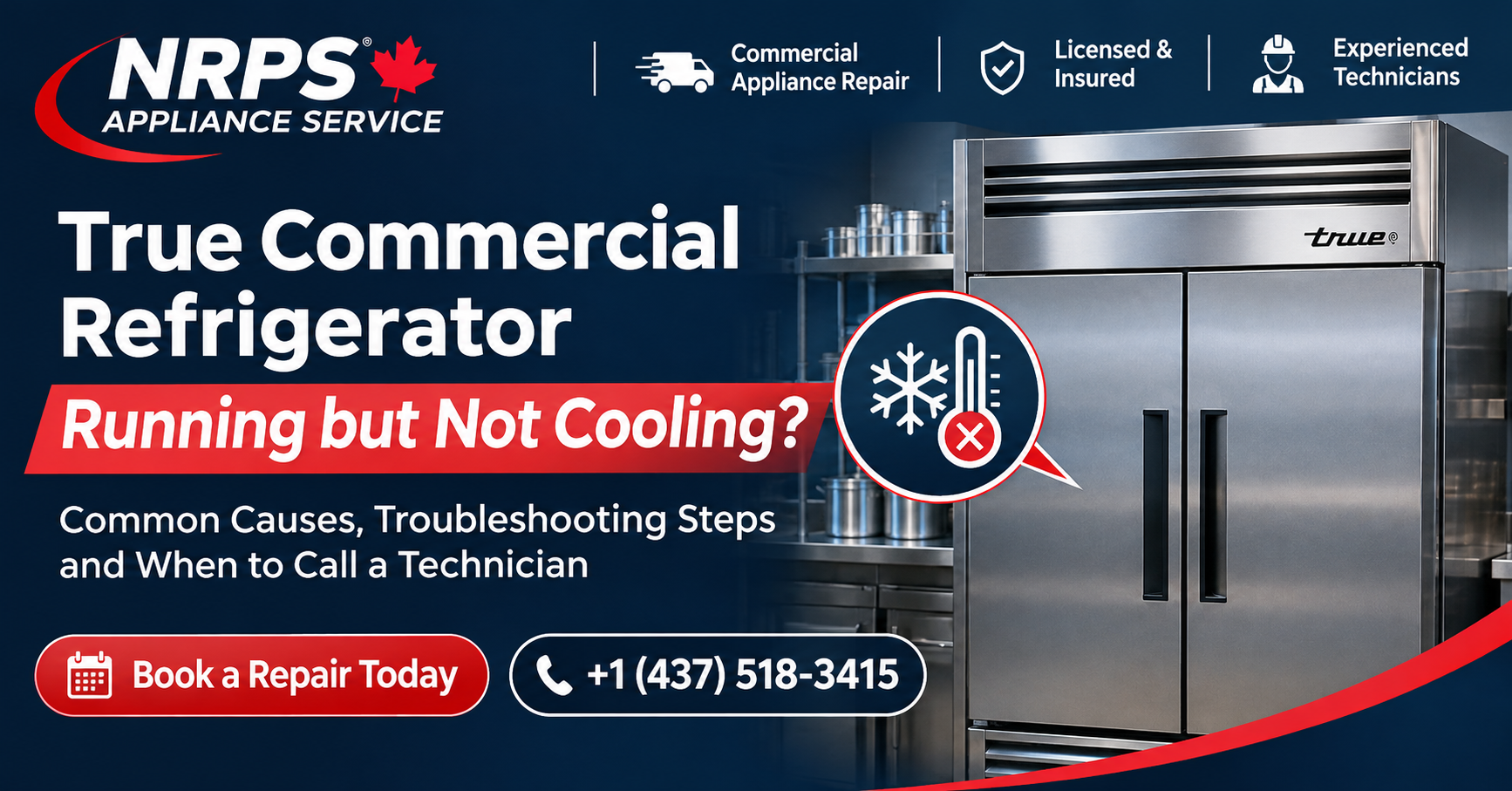
Is your True commercial refrigerator running but not cooling? Discover common causes, safe troubleshooting steps and when to call a professional appliance repair technician.
A True commercial refrigerator that runs but does not cool can have restricted condenser airflow, a faulty evaporator fan, ice buildup, a temperature control problem or a refrigeration system fault. Hearing the refrigerator running does not necessarily mean the compressor is operating correctly.
For restaurants, cafés and commercial kitchens, rising refrigerator temperatures can lead to food spoilage, inventory losses and unexpected business downtime.
Start With the Temperature, Not the Noise
Use a reliable thermometer to check the temperature of stored food and compare it with the refrigerator display. Refrigerated potentially hazardous food should generally be stored at 4°C or below.
Move affected food to working refrigeration and follow your food safety procedures. Do not wait for a technician before protecting perishable inventory.
6 Common Reasons Why a True Commercial Refrigerator Is Not Cooling
1. Dirty Condenser Coil
The condenser releases heat removed from the refrigerated cabinet. In busy commercial kitchens, grease, dust and debris can accumulate around the condenser coil.
Common symptoms include:
- Refrigerator running continuously
- Increasing cabinet temperature
- Compressor overheating
- Reduced cooling performance
Check whether external ventilation openings are blocked. If your model’s manual permits condenser cleaning, disconnect the power and follow the manufacturer’s instructions.
2. Faulty Evaporator Fan Motor
The evaporator fan circulates cold air throughout the refrigerator.
If the fan motor fails, cold air may not reach all areas of the cabinet, resulting in uneven temperatures.
Common symptoms include:
- Weak internal airflow
- Uneven cooling
- Unusual fan noises
- Warm food on certain shelves
Some True refrigerator models stop their evaporator fans when the doors are open. Professional diagnosis is necessary to confirm a fan motor failure.
3. Frozen Evaporator Coil
Excessive ice buildup on the evaporator can restrict airflow and prevent the refrigerator from maintaining its required temperature.
Possible causes include:
- Defrost system malfunction
- Damaged door gasket
- Faulty evaporator fan
- Frequent door openings
- Temperature control problems
Never use sharp objects or a heat gun to remove ice from the evaporator. This can permanently damage refrigeration components.
4. Damaged Door Gasket
A damaged door gasket allows warm, humid air to enter the refrigerator.
This increases the cooling demand, energy consumption and potential frost buildup.
Inspect the door gasket for cracks, tears, deformation and visible gaps. Make sure the doors close completely and that food containers do not prevent proper sealing.
5. Faulty Temperature Sensor or Controller
The temperature sensor and electronic controller regulate refrigeration operation.
A malfunctioning sensor may report an incorrect temperature or prevent the cooling system from operating when required.
If the refrigerator display shows a normal temperature but an independent thermometer indicates otherwise, the temperature control system should be inspected.
Record any displayed error codes before contacting a technician.
6. Compressor or Refrigeration System Problems
A refrigerator may appear to be running even when only its lights and fans are operating.
Possible refrigeration system problems include:
- Compressor starting component failure
- Compressor malfunction
- Refrigerant leakage
- Refrigerant circuit restriction
- Electrical control failure
These problems require professional diagnosis.
Some True commercial refrigerators use flammable R290 refrigerant. Never attempt to recharge the refrigerant, puncture refrigeration tubing or repair the sealed system yourself.
What Restaurant Staff Can Safely Check
Before scheduling a service appointment:
- Check the actual cabinet and food temperatures.
- Confirm the temperature setting has not been changed.
- Inspect the door gaskets.
- Make sure the ventilation openings are not blocked.
- Check for visible frost or ice buildup.
- Record the refrigerator model, serial number and any error codes.
If you notice a burning smell, damaged wiring or water near electrical components, stop using the equipment and arrange professional assistance.
Why Regular Commercial Refrigerator Maintenance Matters
Commercial refrigerators operate under demanding conditions, particularly in restaurants and busy food preparation environments.
Regular maintenance can help reduce unexpected breakdowns, improve cooling performance, maintain appropriate food storage temperatures and extend equipment lifespan.
Condenser cleaning, door gasket inspections and airflow checks are important parts of preventive maintenance. Follow the maintenance schedule recommended for your specific True refrigerator model.
Professional True Commercial Refrigerator Diagnosis
At NRPS Appliance Service, we understand how important reliable refrigeration is to your business.
Our commercial appliance diagnosis helps identify problems involving airflow, fan motors, temperature controls, electrical components and other refrigeration-related faults.
We provide upfront repair quotes before approved work begins. Contact us with your model number and symptoms to confirm service availability, including any sealed-system repair requirements.
Learn more about our Commercial Appliance Service.
Protect Your Appliances With NRPS
Our residential appliance care plans offer labour included, priority scheduling and whole-home appliance coverage under one membership.
Explore our Appliance Care Plans or contact us separately regarding commercial maintenance options.
True commercial refrigerator running but not cooling? Call NRPS Appliance Service at +1 (437) 518-3415 or book online at nrpservice.ca.