



Why Does My Front Load Washer Keep Tumbling Instead of Spinning?
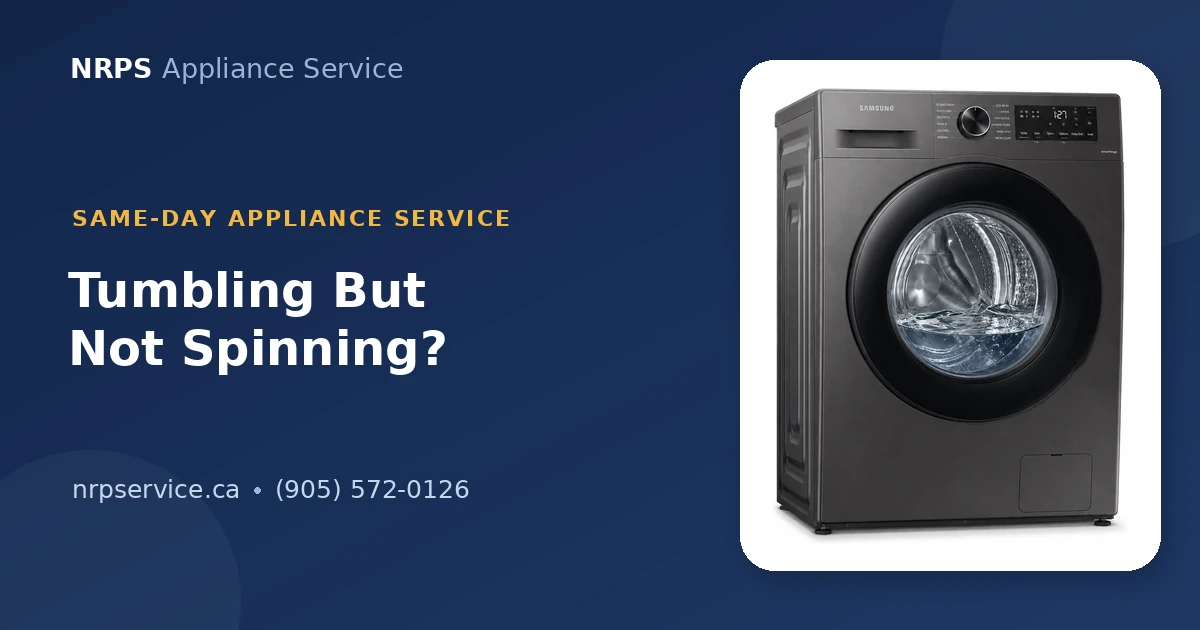
Why Does My Front Load Washer Keep Tumbling Instead of Spinning?
Front load washer tumbling slowly at the end of the cycle instead of spinning? It is usually drainage, not a dead control board. Here is how to tell.
The cycle reaches the end, and instead of building up to a fast spin, the drum just rolls slowly from side to side. Five minutes pass. Then ten. The laundry comes out soaked. Most people assume the machine has frozen or the control board has died, and start pricing replacements.
In most cases the washer is doing exactly what it was designed to do. It is not stuck. It is waiting.
The rule your washer follows
A front load washer will not enter a high speed spin while there is still water in the tub. The control board watches the water level using a pressure sensor, and until that sensor reports the tub is essentially empty, the spin is blocked. What you are watching is the machine tumbling slowly while it tries to finish draining.
This is a protective feature rather than a fault. Spinning at speed with water still inside creates enormous imbalance, and that punishes the bearings, the suspension and the tub. The washer is refusing to damage itself.
The useful consequence: the problem is almost never the spin motor. It is the water, or the machine's ability to detect the water. That single insight narrows the diagnosis dramatically.
Two possibilities, and they need different repairs
Once you accept the washer is waiting for the water level to drop, there are only two explanations. Working out which one you are dealing with is the whole diagnosis.
|
Possibility |
What it means |
|
The water is genuinely still there |
Something in the drain path is restricting flow, so the tub really has not emptied. The washer is right to wait. |
|
The water has gone, but the washer cannot tell |
The tub is empty, yet the pressure sensor is still reporting water, so the spin stays blocked. The washer is wrong, and it is a sensing fault. |
A simple observation separates the two. Pause the cycle and open the door, carefully and only once the drum has stopped. If water pours out or sits visibly in the drum, you are in the first case. If the drum is empty and the machine still refuses to spin, you are in the second.
Case one: follow the water out
Water leaves the tub along a specific path, and a restriction anywhere along it produces the same symptom. Check the path in order, because it runs from easiest to hardest.
The drain pump filter
Behind a small hatch at the bottom front of most machines sits a filter that catches coins, lint, hair, buttons and the occasional sock. It is the most common cause by a wide margin, and it is also the part most owners have never opened. A partly blocked filter still lets water through, just slowly, which is exactly why the machine keeps tumbling rather than throwing an error.
The drain hose
A hose crushed behind the machine, kinked during installation, or partly blocked internally will slow the flow in the same way. It is worth pulling the washer out far enough to see the full run of the hose rather than just the visible end.
The drain pump itself
A pump can fail gradually rather than all at once. It still runs, and it still makes its usual noise, so it sounds healthy. But a worn impeller or a tired motor moves far less water than it should. This is the one that fools people, because everything sounds normal.
The household drain
Sometimes the machine is fine and the house is the problem. If the standpipe or drain line is partially clogged, water cannot leave fast enough no matter how well the pump works. A clue: if a nearby sink or laundry tub also drains slowly, look here first.
Case two: the washer cannot see clearly
The pressure sensor does not measure water directly. It reads air pressure through a small hose connected to the bottom of the tub, and it translates that into a water level. Anything that interferes with that reading gives the control board bad information.
• A blocked pressure hose. Detergent residue, lint or a trapped droplet in that narrow hose distorts the reading, so the board sees water that is not there.
• A faulty pressure sensor. The sensor itself can drift or fail, reporting a level that never drops.
• A control board or wiring fault. Less common, but if the board cannot read the sensor properly, or cannot trigger the spin, the result looks identical from outside.
These are all technician territory, because the diagnosis involves testing components rather than clearing a blockage.
What you can safely check yourself
1. Clean the drain pump filter. Lay a towel down and have a shallow tray ready, because water will come out.
2. Pull the machine out and check the full drain hose for kinks, crushing or blockages.
3. Make sure the hose is not pushed too far into the standpipe, since it needs an air gap.
4. Check whether other drains in the house are running slowly, which points at the household plumbing.
5. Listen during the drain phase. If the pump runs steadily but very little water comes out, that suggests a restriction or a weakening pump.
6. Try a smaller load. If a light load spins normally and a heavy one does not, the drain path is marginal rather than fully blocked.
If the filter and hose are clear and the machine still will not spin, the remaining causes are inside the machine.
When to call a technician
Book a diagnosis if the washer tumbles at the end of every cycle, takes far longer than it used to before spinning, or never reaches high speed at all. The same applies if the drum is visibly empty and the spin is still blocked, since that points at the sensing side rather than the drainage side.
NRPS diagnoses and repairs drainage and spin faults on front load washers from all major brands, including pumps, hoses, pressure sensors and control faults. Our pricing is flat and confirmed upfront, and the details are on our washing machine repair service page.
Fewer surprises with a care plan
If you would rather not deal with faults like this at all, an NRPS care plan includes labour, gives you priority scheduling, and covers every appliance in your home under one membership. See how the care plans work →
Washer tumbling but never spinning? Call (905) 572-0126 or book online and we will find out why.