



Why Is My Front Load Washer Leaking From the Door Gasket?
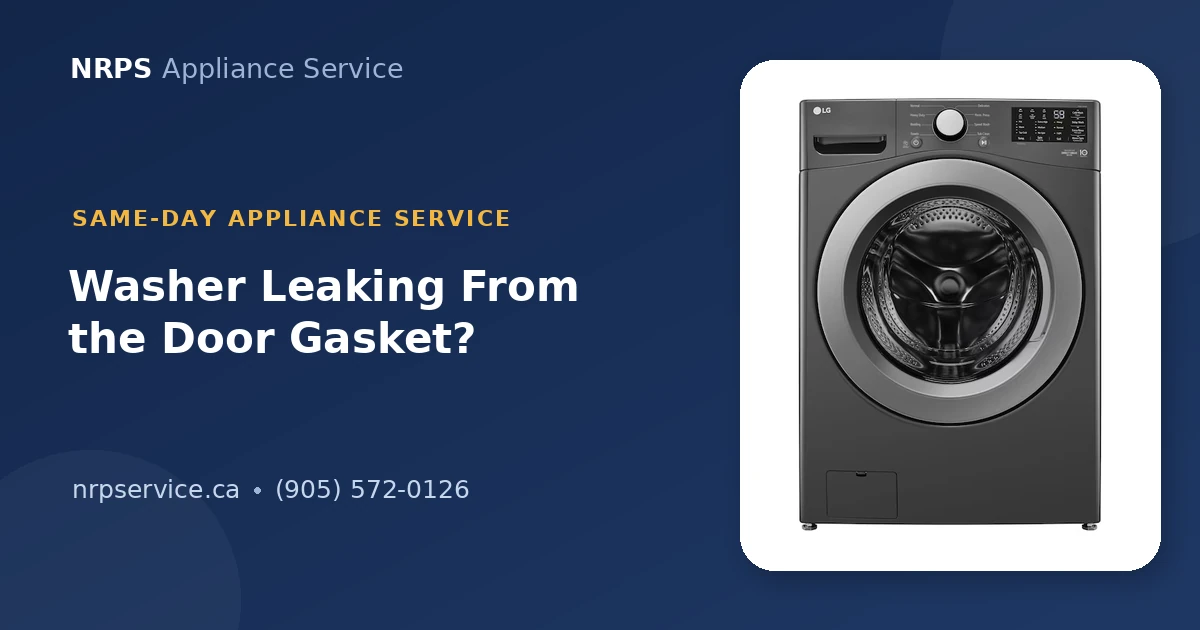
Why Is My Front Load Washer Leaking From the Door Gasket?
Front load washer leaking from the door seal? Eight causes, from a worn gasket to suds and suspension wear, plus what to check before you call a technician.
Water on the floor in front of a front load washer almost always points to the door gasket, also called the door boot or bellow. What is less obvious is that the gasket itself is often not the thing that failed. It is simply where the water found a way out. Before you order a new seal, it is worth working out which of eight causes you are actually dealing with.
First clue: when does it leak?
Pay attention to which cycles leak, because the pattern narrows the cause quickly.
|
When you see water |
What it usually points to |
|
Only on Deep Water, Bulky, Sanitize or Tub Clean cycles |
A gasket that has aged and lost its seal. These cycles use a higher water level, so a marginal seal shows up here first. |
|
Only with big or heavy loads |
Overloading. Bulk pressed against the seal breaks it temporarily. |
|
With foam visible in the drum or on the floor |
Excess suds, usually too much detergent or the wrong type. |
|
Every cycle, regardless of load |
A tear, trapped debris, a door alignment issue, or a clamp problem. |
|
Along with heavy shaking or banging on spin |
Internal wear putting stress on the gasket. This is the one to act on quickly. |
Group 1: the gasket itself
1. It has simply aged
Rubber does not last forever. Years of water, detergent, bleach, heat and constant flexing gradually stiffen the gasket until it no longer presses tightly against the door. Nothing looks obviously wrong, yet the seal has quietly stopped doing its job. This is the classic cause behind leaks that only appear on high water level cycles.
2. It is torn or punctured
A small cut is enough to let water out. The usual culprits are coins and keys left in pockets, bra underwires, other sharp objects, and overloaded laundry rubbing against the rubber. Run your fingers gently around the whole seal, including the underside and the folds, since tears often hide where you cannot easily see.
3. Debris is trapped in it
Hair, pet hair, lint, a stray sock or built up detergent residue can all sit in the folds and hold the seal open just enough to leak. Cleaning the gasket regularly solves this, and it has the useful side effect of preventing the mould and odour that front loaders are known for.
Group 2: how the washer is being used
4. Too much detergent, or the wrong kind
High efficiency machines are designed for low sudsing HE detergent, and only a small amount of it. Too much detergent, or a non HE product, creates foam that can push water past a perfectly good seal. If you see suds on the floor rather than clear water, start here before assuming the gasket has failed.
5. The washer is overloaded
Comforters, blankets and packed loads press hard against the seal as the drum turns, and that pressure can break the seal for long enough to leak. If the leaks only happen with large loads, this is very likely the answer.
6. The door is not closing properly
If the door is misaligned or the hinges have loosened, the gasket is not compressed evenly all the way around. That leaves a gap on one side, usually with a consistent drip in the same spot. Watch where the water appears, since a leak in one fixed position often points here.
Quick test: close the door on a strip of paper at several points around the seal and try to pull it out. If it slides out easily at one spot but grips at the others, the door is not sealing evenly there.
Group 3: something else in the machine
7. A damaged or loose retaining clamp
The gasket is held in place by retaining clamps, usually a spring or wire band. If a clamp is loose, damaged, or was not reseated correctly after a previous repair, water escapes around the gasket rather than through it. The seal looks fine because it is fine. It is the mounting that failed.
8. Internal wear causing excess drum movement
Worn shock absorbers, tired suspension springs, a damaged spider arm or failing bearings all let the drum move far more than it should. That movement puts abnormal stress on the gasket, and the seal is often the first place the problem shows itself. If your washer also bangs, shakes or walks during the spin cycle, treat the leak as a symptom rather than the fault, because replacing the gasket alone will not fix it.
Worth acting on: a leak paired with heavy vibration usually means wear inside the machine. Left alone, that wear gets more expensive, so it is the one situation here where waiting genuinely costs money.
What to check before you call
1. Inspect the full seal for tears, including the underside and the folds.
2. Wipe the gasket clean and remove any debris, hair or residue.
3. Check the door closes fully and evenly, and that the hinges are tight.
4. Switch to HE detergent and reduce the amount you use.
5. Run a normal sized load rather than a packed one and see whether the leak returns.
If the leak persists after all five, the gasket or another internal component needs proper diagnosis.
When the gasket does need replacing
Replace the seal when it is torn or punctured, hardened and no longer sealing, permanently deformed, or still leaking after being cleaned and inspected with no damage found. Doing it early is worth it, since a slow leak damages flooring and cabinetry long before it damages the washer, and that is usually the more expensive repair.
Front load washer leak repair in Hamilton
NRPS Appliance Service diagnoses and repairs leaks on front load washers of all major brands, across Hamilton (including Ancaster, Dundas, Stoney Creek and Waterdown), plus Burlington, Oakville, Grimsby, St. Catharines and Caledonia. Whether it turns out to be a worn gasket, a clamp, door alignment or suspension wear behind it, we identify the real cause and tell you what the proper repair is. Our pricing is flat and confirmed upfront, and you will find the details on our washing machine repair service page.
Fewer surprises with a care plan
If you would rather not worry about repairs at all, an NRPS care plan includes labour, gives you priority scheduling, and covers every appliance in your home under one membership. See how the care plans work →