



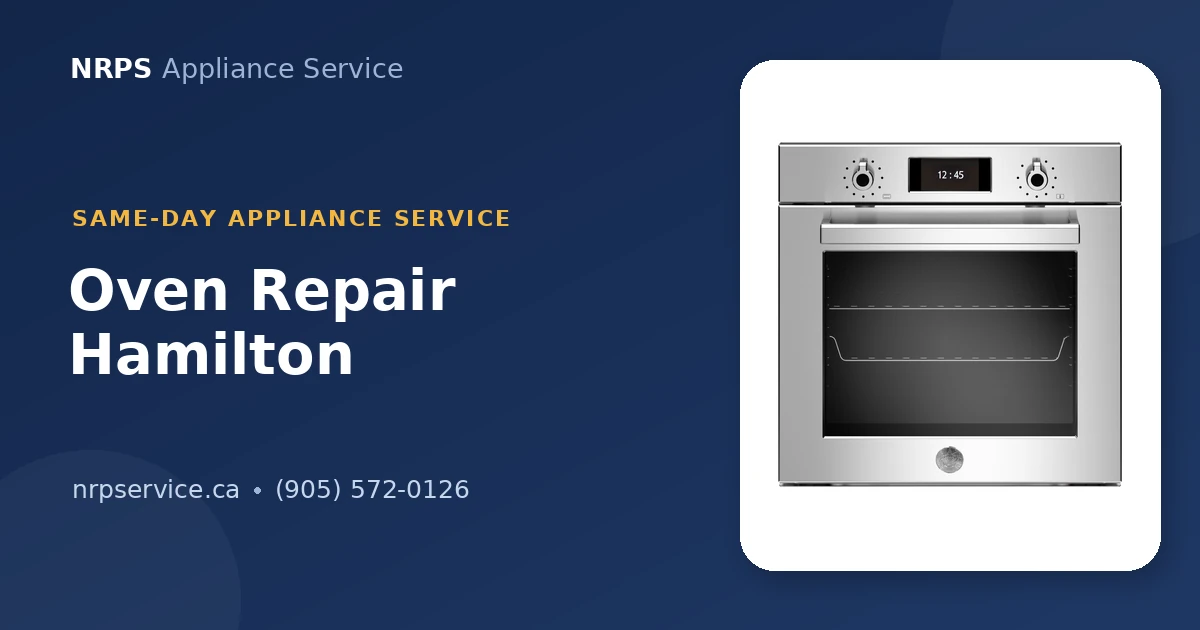
Oven Repair Hamilton
Oven Repair Hamilton
Oven not heating, cooking unevenly or burning food in Hamilton? What each symptom means, how to check your oven temperature, and expert repair.
An oven rarely fails all at once. Usually it gives you clues first: food takes longer, one side browns more than the other, or the temperature never feels quite right. Learning to read those clues tells you how serious the problem is. Here are the symptoms we see most in Hamilton homes, and what each one usually means.
It will not heat at all
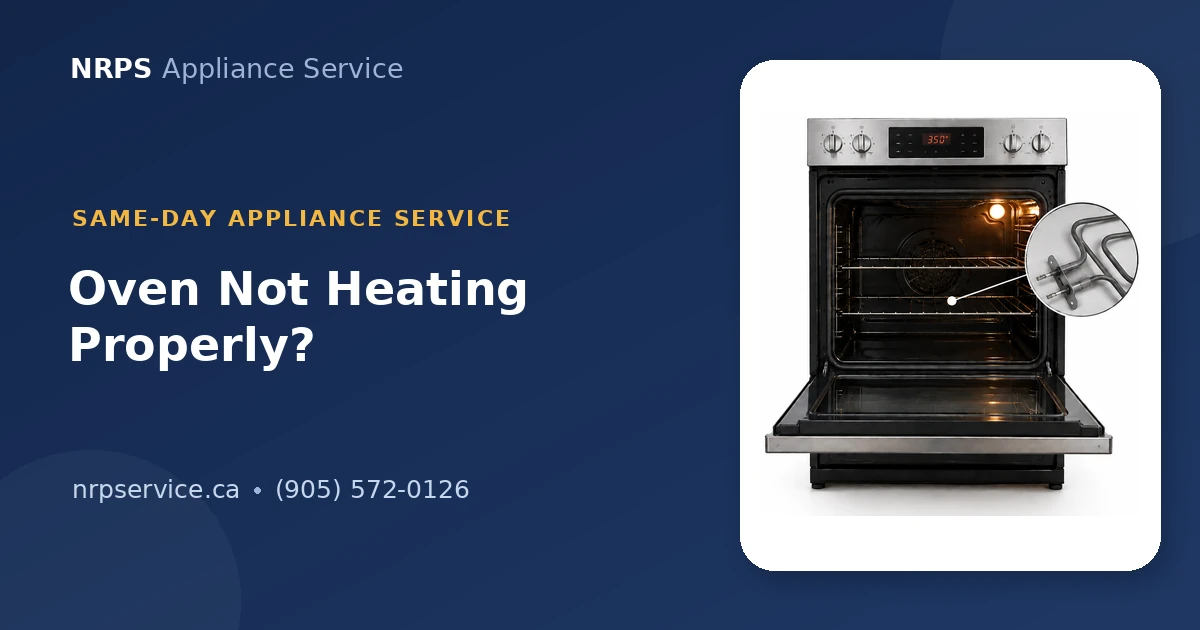
The most obvious fault, and the cause depends on your oven. On an electric oven, a bake or broil element has usually burned out, and you can often see a break or blister in it. On a gas oven, the igniter is the most common culprit, since it weakens over time until it can no longer open the gas valve. A failed thermostat or control board can also stop an oven heating.
It heats, but food cooks unevenly
One side browns while the other stays pale, or the top burns before the middle cooks. This usually points to a weakening element, a convection fan that has stopped circulating air, or a door seal letting heat escape. Uneven cooking is worth fixing early, because it often signals a part on its way out.
Everything comes out over or under cooked
If your oven simply runs hotter or cooler than the dial says, the temperature sensor or thermostat is usually drifting. This is one of the most common oven complaints, and one of the easiest to confirm yourself. See the calibration check below.
How to check your oven temperature
Before assuming the worst, it is worth testing what your oven is actually doing:
1. Put an oven-safe thermometer on the centre rack.
2. Set the oven to 180C (350F) and let it fully preheat.
3. Leave it for 15 to 20 minutes, then read the thermometer.
4. Take a few readings over the next half hour and average them.
A small difference of a few degrees is normal. If your oven is out by 15C (25F) or more, or the temperature swings widely, the sensor or thermostat needs attention. Many ovens allow a small calibration adjustment in the settings, so check your manual first, but a large or growing error points to a faulty part.
The door will not close, or heat escapes
A worn door gasket, a bent hinge, or a broken door spring lets heat out and makes everything cook slowly. The seal is a small part with a big effect on performance and energy use.
It trips the breaker, or smells of gas
These are the two symptoms not to wait on. A breaker that trips when the oven runs usually means a shorted element or wiring fault.
Safety first: if you smell gas, do not use the oven. Avoid sparks and flames, ventilate the room, and book a repair right away. Gas work should always be handled by a qualified technician.
What you can check yourself
• Look at an electric element for visible breaks, blisters or burn marks.
• Check the door gasket for gaps, tears or hardened sections.
• Make sure racks and cookware are not blocking airflow, especially on convection models.
• Run the temperature check above before deciding the oven is faulty.
Anything involving elements, igniters, gas connections, wiring or the control board should go to a technician.
Oven and range repair in Hamilton
NRPS Appliance Service repairs gas and electric ovens, ranges and wall ovens from all major brands, across Hamilton (including Ancaster, Dundas, Stoney Creek and Waterdown), plus Burlington, Oakville, Grimsby, St. Catharines and Caledonia. Our pricing is flat and confirmed upfront, so you can find the details on our oven and range repair service page.
Keep every appliance covered
If you would rather not think about repair bills, an NRPS care plan bundles labour, priority scheduling and whole-home appliance coverage into one membership. See how the care plans work →
Oven not behaving? Call (905) 572-0126 or request a call online, and we will get to you fast.