



Why Is My Fridge Leaking Water?
Why Is My Fridge Leaking Water?
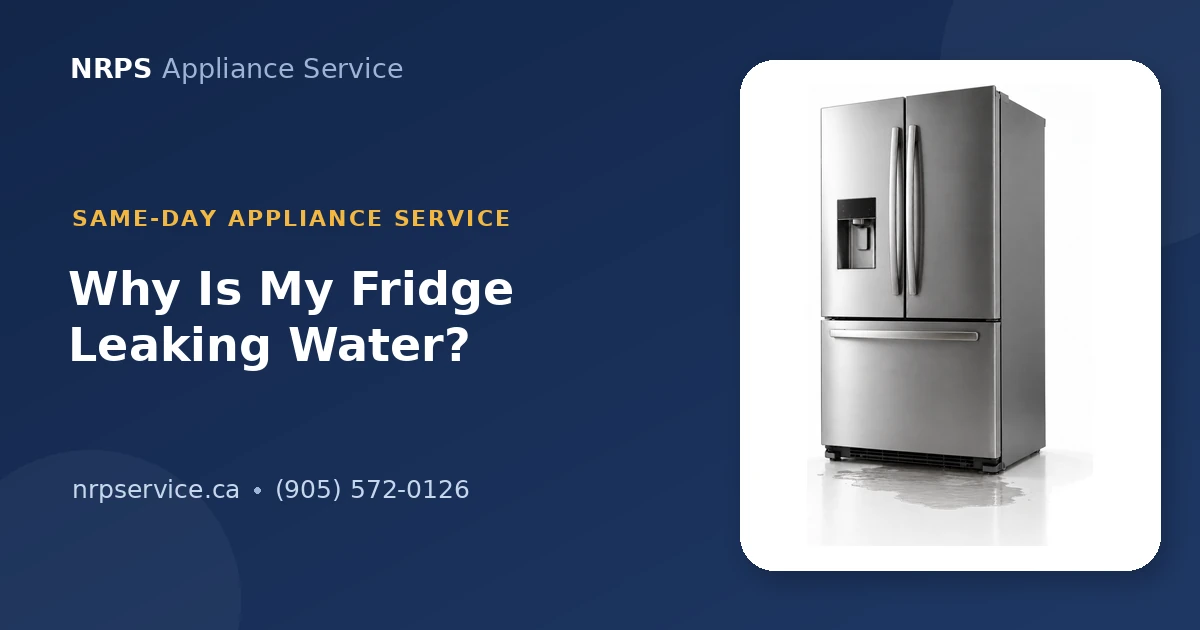
Water pooling under the crisper or on the kitchen floor? A fridge only has two sources of water. Find out which one is leaking and what to check.
You pull out the crisper drawer and there is a pool of water underneath. Or you notice the floor in front of the fridge is wet, again, and you are not sure how long it has been happening. Either way, water where it should not be is worrying, because it damages flooring and cabinetry quietly while you decide what to do about it.
The useful thing is that a refrigerator only has two sources of water, and working out which one you are dealing with takes about a minute.
Water it makes, or water it is given
Every fridge produces water on its own. Humid air from the room condenses on cold surfaces, and frost that builds on the evaporator is melted away during the defrost cycle. That meltwater is meant to run down a drain hole, through a tube, into a shallow pan underneath the fridge, where the heat from the compressor evaporates it. You never see it, which is the point.
Some fridges also receive water from outside, through a supply line connected to your plumbing, feeding the ice maker and the water dispenser. Not every fridge has this. If yours does not, you can skip half the causes below immediately.
The one minute test: is the water clean and clear, or slightly cloudy with a faint smell? Clean water almost always means the supply side, since it is drinking water. Water with a trace of odour is meltwater that has picked up food residue on its way through the drain.
Where the water is tells you a lot
|
Where you find it |
Most likely source |
|
Under the crisper drawers |
A blocked defrost drain. The most common cause by far. |
|
A sheet of ice on the freezer floor |
The same blocked drain, freezing before it can escape. |
|
On the floor at the front |
Drain overflowing forward, a door seal issue, or a fridge sitting out of level. |
|
On the floor at the back |
The supply line, the inlet valve, or a cracked drain pan. |
|
Around the dispenser or filter area |
The water filter housing or its tubing. |
|
Only after you change the filter |
The filter is not seated correctly, or it is the wrong model. |
|
Only in hot, humid weather |
Condensation, often made worse by a tired door seal. |
The blocked defrost drain, explained
This deserves its own section because it causes more fridge leaks than everything else combined.
At the back of the freezer floor, behind the panel, there is a small drain hole. Meltwater from each defrost cycle runs into it, travels down a narrow tube and lands in the drain pan by the compressor. The tube is narrow, and over time food particles, grease and general debris find their way in. Once partly blocked, water backs up.
What happens next depends on where it backs up to. Inside the freezer it refreezes, building the sheet of ice people find on the freezer floor. In the fridge section it seeps forward and collects under the crisper drawers, which is why that is the single most common place to find a puddle.
There is a further consequence worth knowing. That same ice can eventually block the airflow duct, at which point the fridge stops cooling properly while the freezer stays cold. If that sounds familiar, our guide to a warm fridge with a cold freezer covers it. The two faults are often the same fault at different stages.
The other causes worth checking
A worn or dirty door seal
A seal that no longer closes tightly lets warm humid air in continuously. That air condenses inside, and the extra water quickly overwhelms a drain designed for normal defrost volumes. Clean the seal with warm soapy water first, since sticky residue alone can hold it slightly open. The paper test helps: close the door on a sheet of paper and pull. If it slides out easily at any point around the door, the seal is not doing its job there.
The fridge is out of level
Refrigerators are designed to sit very slightly tilted back, so the doors swing closed and water runs toward the drain rather than forward. A fridge that has been moved, or that sits on a floor that is not flat, can drain forward instead. Levelling is often a five minute adjustment of the front feet.
A cracked or dislodged drain pan
The shallow pan underneath collects the meltwater so it can evaporate. It can crack, or get knocked out of position when the fridge is moved for cleaning. The symptom is water at the back or underneath with no obvious source above it.
The water supply line and inlet valve
If your fridge is plumbed in, the line, its fittings and the inlet valve are all potential leak points. These leaks tend to be clean water, steady rather than occasional, and usually appear at the back. If you suspect this, turn off the shut off valve for the fridge line before anything else.
The water filter
Filter related leaks are extremely common and often self inflicted. A filter that is not pushed fully home, not rotated into its locked position, or simply the wrong model for the fridge will weep water. Housings also crack with age. If the leak started within a day of changing the filter, remove it and refit it properly before assuming anything worse.
What you can safely check
1. Unplug the fridge before working inside it, and dry the area so you can see fresh water appear.
2. Empty the freezer and look for ice on the floor or a blocked drain hole at the back.
3. Check under the crisper drawers, which is where fridge side drain water collects.
4. Clean the door seals and run the paper test around all four sides.
5. Check the fridge is level, with a slight backward tilt.
6. If you recently changed the water filter, reseat it or refit the old one to see whether the leak stops.
7. Look behind the fridge for wet fittings on the supply line, and shut off that valve if you find any.
A blocked drain can sometimes be cleared by flushing warm water through the drain hole. Do not push wire or sharp objects into it, since the tube is soft and the evaporator sits directly behind that panel. If flushing does not clear it, it needs doing properly.
How urgent is a fridge leak?
More urgent than it looks, for reasons that have little to do with the appliance. Water sitting under a fridge damages laminate and hardwood flooring, swells cabinet bases and can reach subfloor before anyone notices, since the fridge hides the evidence. That repair is often more expensive than the appliance one.
There is also a straightforward safety point. Water on a kitchen floor beside a plugged in appliance is both a slip risk and an electrical one, so it is worth dealing with rather than living with a towel in front of the fridge.
Refrigerator leak repair
NRPS repairs refrigerator leaks on all major brands, including blocked defrost drains, failed drain heaters, door seals, inlet valves, filter housings and ice maker lines, on French door, side by side, top freezer and built in models. Our pricing is flat and confirmed upfront, and the details are on our fridge repair service page. For the wider picture, see our complete guide to fridge repair.
Keep every appliance covered
If you would rather have problems like this caught before they reach your flooring, an NRPS care plan includes labour, priority scheduling and whole-home appliance coverage under one membership. See how the care plans work →
Water under or inside your fridge? Call (905) 572-0126 or book online, and put a towel down in the meantime.